

Permission To Build
Nobody is coming to tell you it's okay.

One evening an invite landed in my inbox for a small founder dinner, the kind you are supposed to feel lucky to get. It was raining. I went anyway, because I finally had somewhere I could say out loud that I was building a fashion tech company.
There were twelve of us, and we went around the table saying what we were building. Health tech. Bio tech. Someone making agents for lawyers. Someone in fintech. Then me, a nontechnical solo founder in fashion tech.
This was early 2025, back when fashion tech did not mean tech in San Francisco. So when I said it, someone across from me asked, “oh, like an app for your outfits?” I explained the real thing, a smart marketplace for the unsold inventory that brands sit on. I could see I had already lost the room. Everyone was politely waiting for me to finish so the introductions could move on.
A few weeks later I walked into a fashion tech meetup and the whole temperature changed. People asked real questions. They got excited about what everyone else was building. Same at the women founder events, same anywhere full of people who had also spent time in the group the mainstream overlooked. The interest was quiet and it was real, and it showed up wherever I was surrounded by people who knew exactly what that first night had felt like.
For a long time I let the wrong opinions win. I started believing the version of me that the dinner table had ignored. It cost me more than I knew at the time.
The Permission Tax
The apology came due in three installments.
The first was saying yes to the wrong cofounder. I spent months hunting for someone to build with, mostly because I could not stand the thought of saying the words “solo founder” out loud one more time. By the time the fifteenth conversation turned into a yes, I took it, even though I already knew this person did not want the problem the way I wanted it. I stayed far longer than I should have, because starting over felt worse than living with the misalignment. It cost me months I did not get back.
The second was hiring too soon. Solo among cofounded startups, I wanted to look credible, so I hired before I had a system that needed the help. I filled the roles a “real” company was supposed to have, not the ones the actual work was asking for next. I was building a team to be seen with instead of a team the product needed.
The third was waiting too long to ship. I kept the product to myself because I did not want to put a half-finished thing in front of people who already thought the idea was small. I wanted it a little more polished, a little more defensible, before anyone saw it. That instinct cost me months of feedback I could have had, users I could have learned from, and a run of decisions I made alone because I was too scared of what the louder voices would say.
What’s Different Now
Every one of those mistakes came from the same place. I cared too much about how I came across to people who had already made up their minds. The wrong cofounder, the hires I did not need, the product I sat on. Each one was a way of asking permission from people who were not even paying attention.
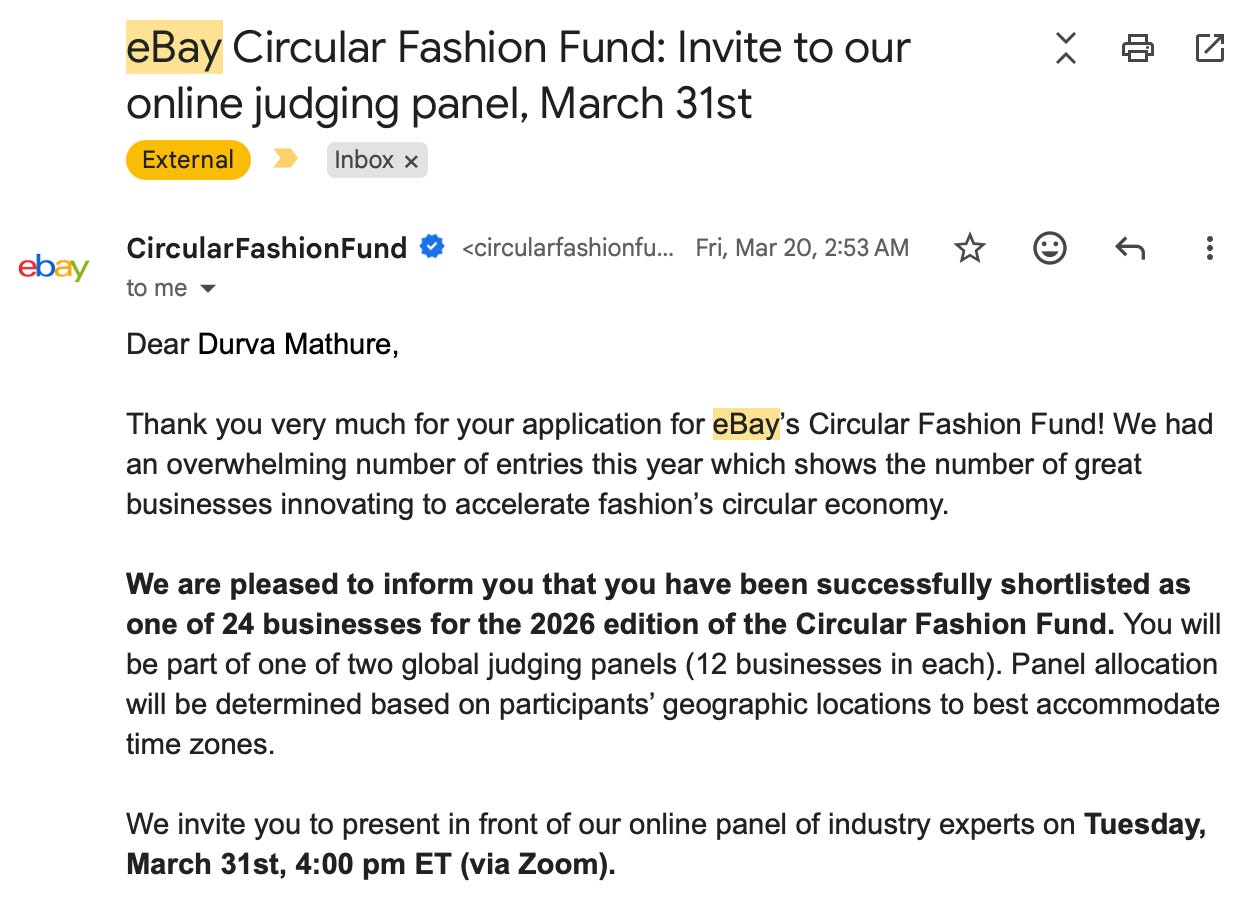
Here is the part I wish I had understood sooner. The idea that got filed under “app for outfits” at that dinner was the same idea that later landed in the top 24 of more than 10,000 applicants worldwide for eBay’s Circular Fashion Fund. The lesson is not that “see, eBay agreed.” The lesson is that I shouldn’t have let the opinions of the least curious person have any effect on me.
And so much has changed in just over a year. If you are building without a technical background today, you are not doing it alone. The vibe coding community is bigger than it was a year ago and still growing, and there are more nontechnical founders shipping real products than at any point I can remember. The tools got better. The people got friendlier.
Fashion tech got its moment too. The category that earned me a confused question at that dinner now has Phia and Daydream and a dozen others, and the same people who once filed it under shopping are chasing it.
The people who waved me off were never the ones who got to decide whether the thing was worth building. I just did not know that yet.
Build Anyway
So here is the only line I actually want you to keep. You do not need anyone’s permission to build.
If you do not know the industry yet, that is fine. Reach out to the people who do. In my experience someone will almost always give you fifteen minutes, and fifteen honest minutes are worth more than a year of guessing.
If you are not technical, there are hundreds of tools now that will carry you at least to the next step. You can sit down with Claude Code on a Saturday and have a rough MVP in front of a real customer by Sunday. Something real beats something perfect every single time.
If you are solo, I know how heavy that word lands when everyone around you has a cofounder. But you will find your people. You will find a team, and if you want them, you will find cofounders too. None of that has to be solved before you start.
The one thing I do not want, at any point in this, is for you to feel alone. You are not. Remember the people who actually leaned in and asked the real questions. That kind of room exists for you too. You just have to find it.
That is the whole reason Table For One exists. It is a community for solo founders where the connections are real and helping each other out is the baseline, not the favor. If that sounds like what you have been looking for, come pull up a chair.
And if walking into even a friendly crowd still feels like too much, start smaller. Message me. I will give you fifteen minutes, at the very least to hear you rant.

If you are building something that feels too early or too niche or just outside the mainstream, reply and tell me what it is. I read every one. And if you know a solo founder, share this with them.



The eBay example isn't the point — you're right that it isn't. The point is the gap between how much weight you gave the dinner table and how little weight it deserved. That gap is the whole lesson.
This is great! Keep up the good work! I really think the fashion side of fintech is quite promising.